
Your patients aren't telling you everything: what 350,000 surveys reveal about dental practice growth
What actually separates a 4.7-star practice from the rest? To find out, we analyzed 350,000+ patient intake surveys and 33,000 appointments booked through Opencare across the US in 2025. We looked at what patients want, what predicts high ratings, and what causes low ones.
What we found: dental practice growth comes down to operations, not clinical quality alone. The factors that drive higher ratings, stronger new patient acquisition, and better retention are operational. And most of them are fixable starting this week.
*Unless otherwise noted, all data in this post comes from the Opencare platform.

1. Optimize the new patient conversion path
New patients are nearly twice as valuable as a return visit. But converting them takes more than having open availability. It requires a booking experience built around how they actually behave.
New patients are worth more because they're delayed and have higher needs
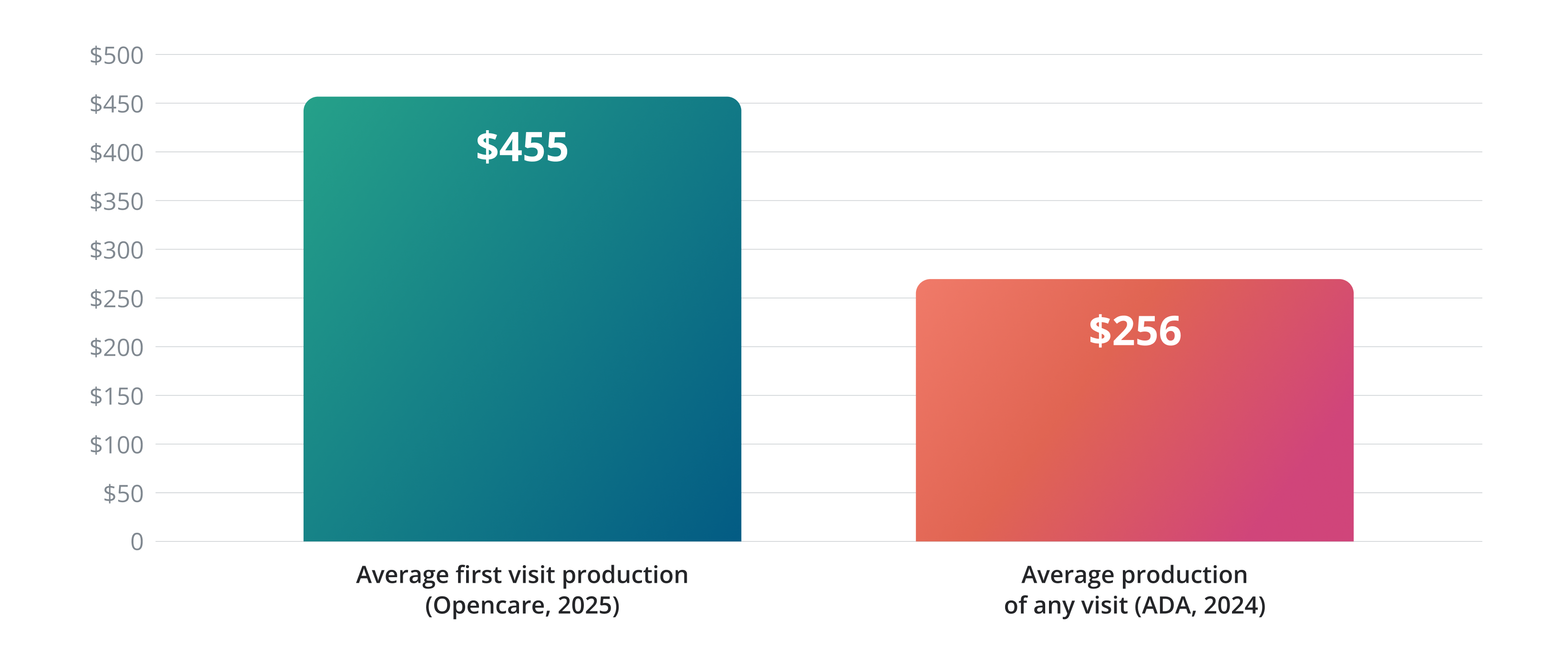
The production gap is real. Opencare patients generate an average of $455 at their first visit. The industry average for any given visit is $256 (ADA Survey of Dental Practices, 2024).
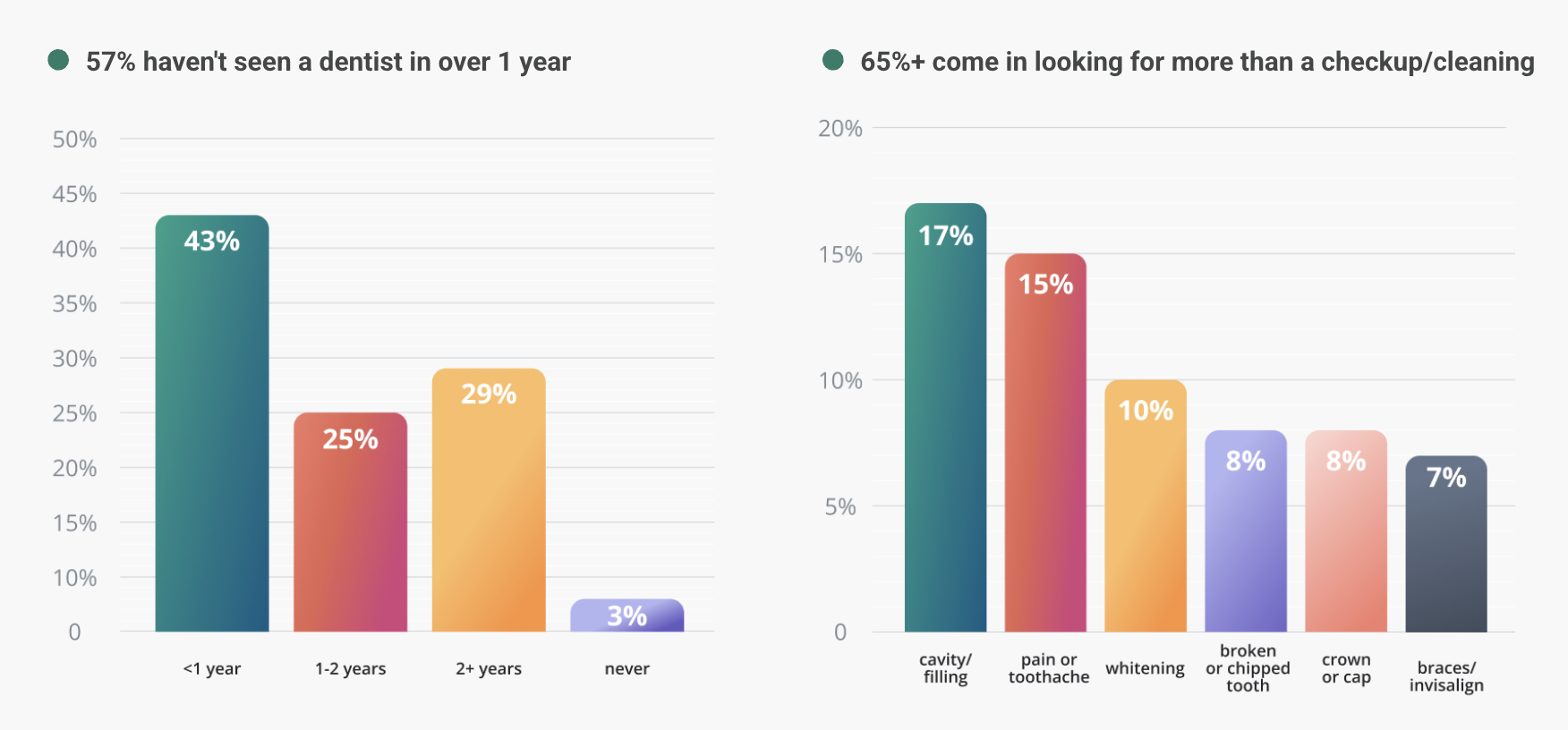
That's close to 2x. And the data tells us exactly why. 57% of new patients haven't seen a dentist in over a year. Because they've been delayed, 65%+ come in looking for treatment that goes beyond a routine checkup or cleaning: cavities, tooth pain, whitening, broken teeth. Delayed care creates higher need, and higher need drives higher production.
The challenge: they're apprehensive and unmotivated
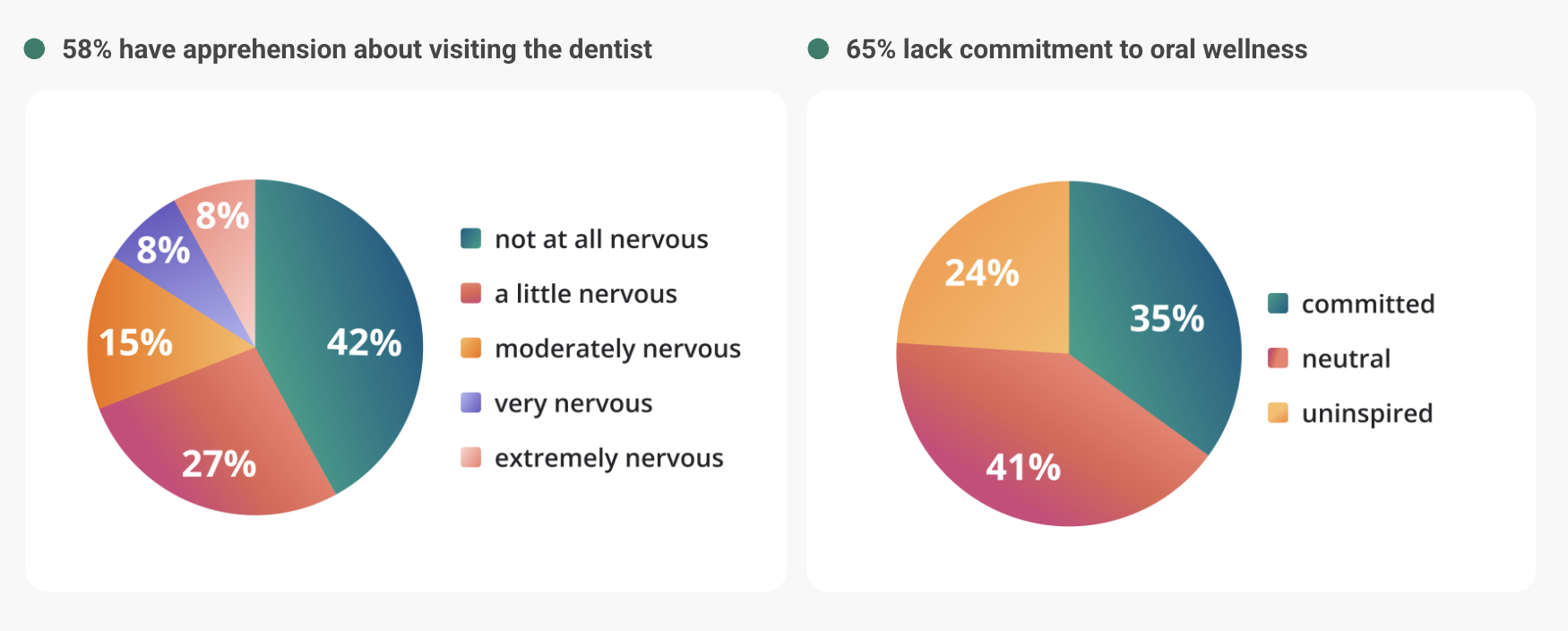
Here's the complication. 58% of new patients have apprehension about visiting the dentist, and 65% lack strong commitment to oral wellness. They're worth more on paper, but they're also harder to get through the door.
That's the case for optimizing your conversion path. These patients are already working against their own inclination to book. More friction in your process means more of them slip away.
They expect to book on demand
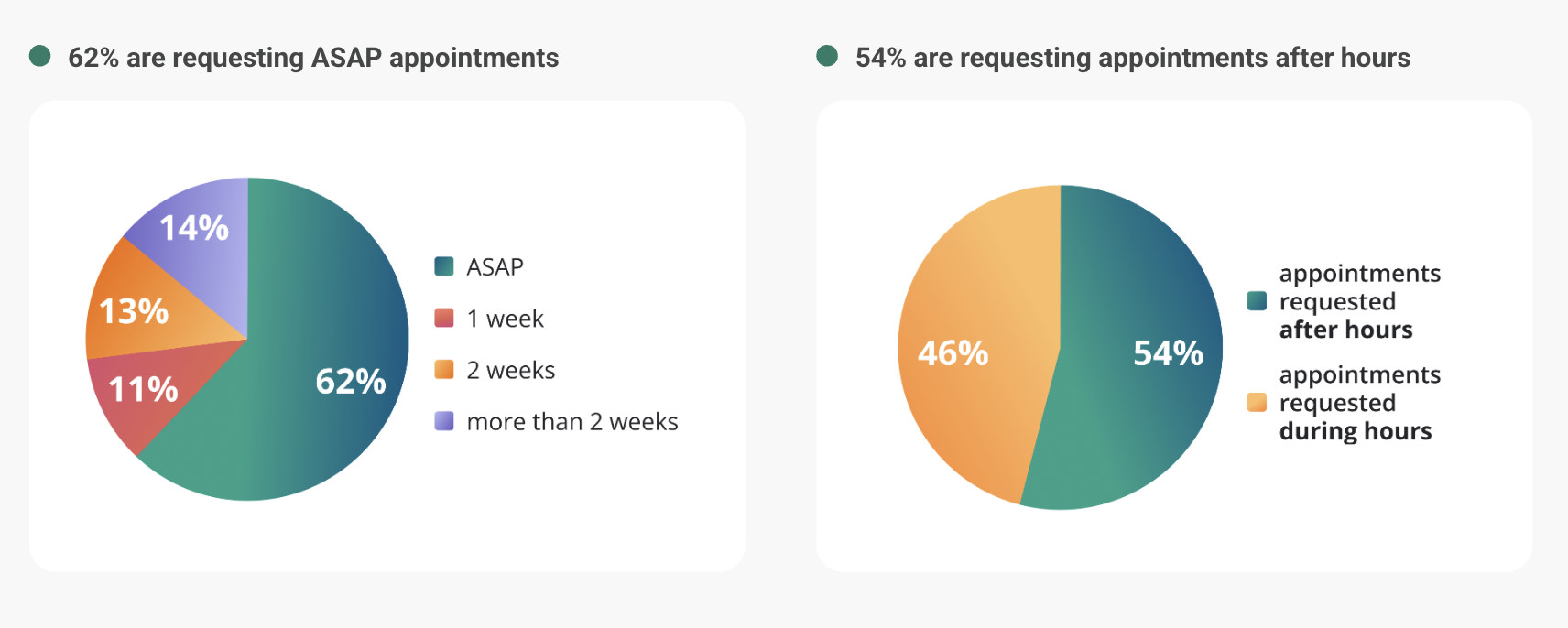
There's one more layer to this. 62% of new patients request ASAP appointments, and 54% reach out after hours. They're not calling during office hours and waiting for a callback. They expect to book a dentist appointment the same way they book everything else: on their time, on their terms.
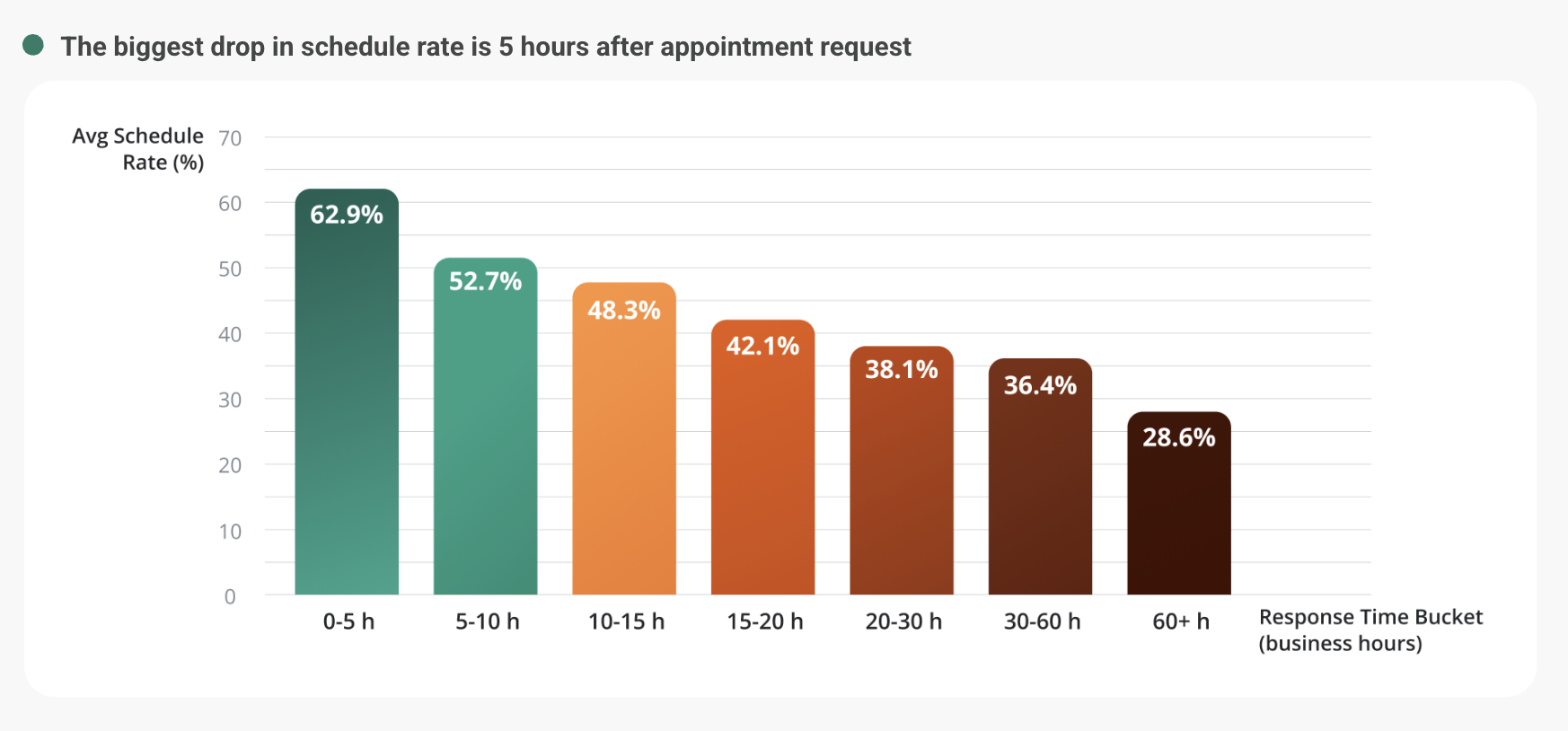
The response time data makes the stakes clear. Practices that respond within 5 hours see a 62.9% average schedule rate. The sharpest single drop happens after that 5 hour window.
What to do starting tomorrow
New patients are your highest-value opportunity. They're also the most likely to slip away if you make them wait or make booking complicated. Three immediate changes:
- Implement direct online booking, available any time of day.
- Prioritize responding to new patient requests within 5 hours and make this a metric for your team.
- Leave room in your weekly schedule for new patients.
Start getting profitable new patients
2. Elevate team training
Of all the factors that predict high ratings, staff behavior matters more than anything else. More than treatment quality. More than equipment. That's not an assumption. It's what 33,000 patient appointments show.
Staff is the dominant driver of high ratings
In Opencare's analysis, the top predictors of high ratings are almost entirely staff-related. Professional scores highest at 61 on the predictiveness scale, followed by friendly at 59. Thorough explanation and knowledgeable both score 56. Effective treatment comes in at 54. The top four factors have nothing to do with your technology or your equipment.
.png)
What great staff actually looks like in reviews
When patients leave 5-star reviews, three themes come up consistently.
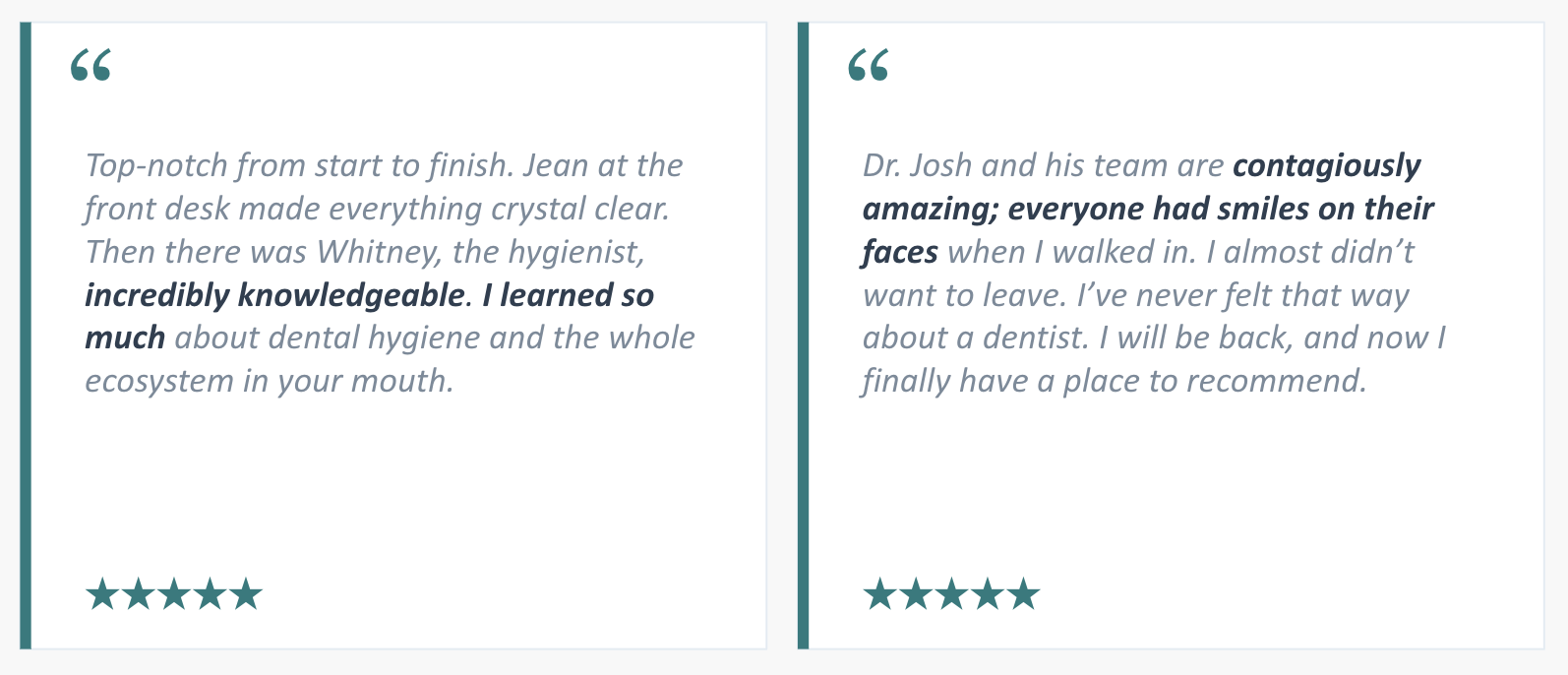
Friendly staff: patients don't just say the visit went well. They name specific team members. They describe the atmosphere when they walked in. That detail signals a level of connection that goes well beyond a standard interaction.
Professional and knowledgeable staff: patients say they felt educated, not sold to. Staff who explained conditions, walked through x-rays, and gave home care tips left a lasting impression. The distinction patients draw is between being told what to do and actually understanding why.
Attentive, caring staff: patients noticed when team members caught their anxiety without being told, adjusted without being asked, and made them feel like a person rather than a slot on the schedule.
What to do starting tomorrow
- Get to know something personal about each patient and capture it in appointment notes for future follow-up.
- Lead with education: explain conditions, walk through x-rays, give tips.
Sidenote: how top practices benchmark
Opencare practices average a 4.7/5 appointment rating and a 63% rebooking rate within one year. The industry average for rebooking is 41% (Journal of the American Dental Association). That 4.7 threshold matters beyond the platform: new patient calls cluster significantly around practices with ratings of 4.7 or higher (RevUp Dental via Oral Health Group, 2025).
The practices hitting these numbers have built operations that consistently deliver the experiences patients rate highly.
Download the full guide to access the rest of our findings:
Full guide: what 350,000 surveys reveal about dental practice growth